
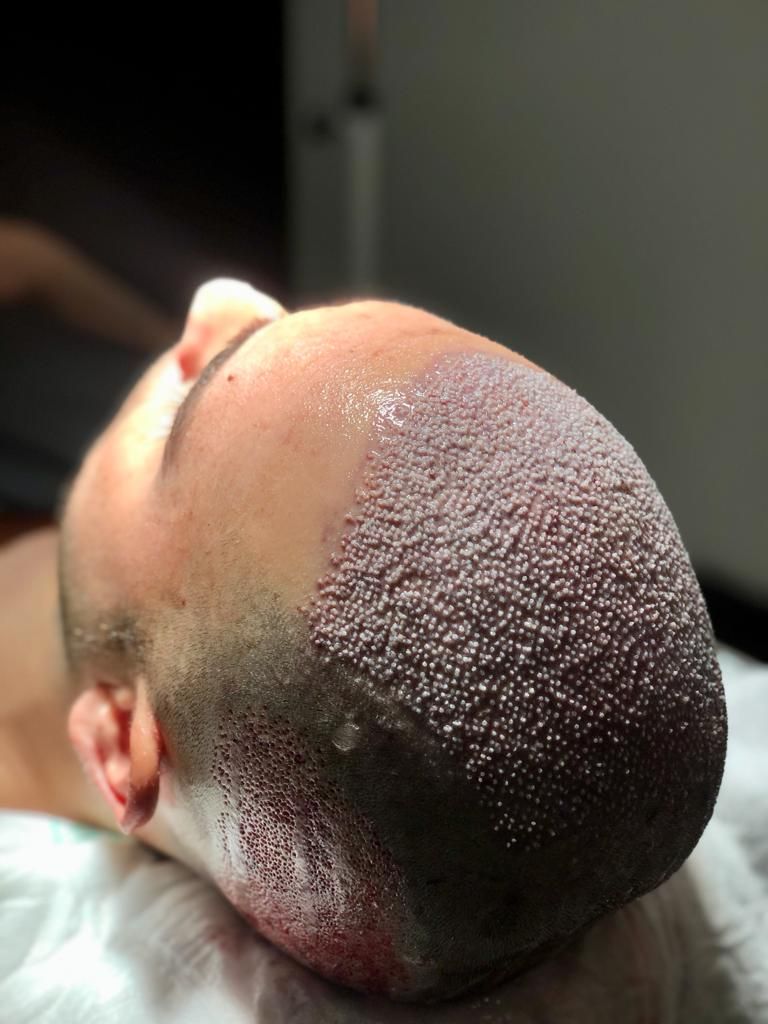
FUE Hair Transplant: Natural Hair Restoration with Advanced Follicular Unit Extraction
What is FUE Hair Transplant?
Follicular Unit Extraction (FUE) is one of the most advanced and widely preferred hair restoration procedures available today. It is a minimally invasive technique in which individual hair follicles are extracted from the donor area—typically the back and sides of the scalp—and transplanted into thinning or bald areas. Unlike traditional strip methods (FUT), FUE does not involve a linear scar and offers faster healing with natural-looking outcomes.
The procedure is suitable for both men and women experiencing hair loss due to genetic baldness, receding hairlines, thinning crowns, traction alopecia, or hair loss resulting from injury or scarring.
How Does FUE Hair Transplant Work?
FUE works on the principle of donor dominance. Hair follicles taken from the permanent donor zone are genetically resistant to hair loss and continue to grow after being transplanted into the recipient area. Modern FUE techniques transplant naturally occurring follicular units containing 1–4 hairs, helping achieve a natural hairline and density.
Stages of FUE Hair Transplant
1. Consultation & Hair Analysis
A detailed scalp examination is performed to assess the pattern of hair loss, donor hair availability, scalp condition, and treatment goals. A customized treatment plan is created based on individual requirements.
2. Hairline Design
The surgeon designs a natural-looking hairline considering facial proportions, age, and future hair loss patterns.
3. Donor Area Preparation
The donor area is trimmed and local anesthesia is administered to ensure patient comfort throughout the procedure.
4. Follicle Extraction
Using specialized micro-punch instruments (typically less than 1 mm), individual follicular units are extracted from the donor area with precision.
5. Graft Sorting & Preservation
Extracted grafts are carefully examined, sorted, and preserved under controlled conditions to maximize graft survival until implantation.
6. Recipient Site Creation
Tiny recipient sites are created in the bald or thinning areas while maintaining the correct angle, direction, and density for natural-looking growth.
7. Graft Implantation
The extracted follicles are meticulously implanted into the recipient area to recreate a dense, natural hair pattern.
8. Post-Procedure Care
Patients receive detailed aftercare instructions, medications, and follow-up schedules to support healing and optimal growth.
Benefits of FUE Hair Transplant
✔ No linear scar
✔ Minimally invasive procedure
✔ Natural-looking hairline design
✔ Faster recovery compared to traditional methods
✔ Permanent hair restoration using your own hair
✔ Suitable for men and women
✔ Minimal discomfort during and after the procedure
✔ Can be used for scalp, beard, eyebrow, and scar restoration procedures
Who is an Ideal Candidate?
You may be a suitable candidate if you:
- Have male or female pattern hair loss
- Have a stable donor area with healthy follicles
- Have a receding hairline or thinning crown
- Want a permanent solution for hair loss
- Have realistic expectations regarding density and coverage
- Are in good general health
A detailed consultation is essential to determine candidacy.
Recovery Timeline
First Week
- Mild redness, swelling, or scabbing may occur.
- Most patients resume routine activities within a few days.
2–6 Weeks
- Temporary shedding of transplanted hairs (“shock loss”) is common and expected.
3–4 Months
- New hair growth begins to appear.
6–9 Months
- Noticeable improvement in density and coverage.
12–18 Months
- Final results continue to mature with improved thickness and natural appearance.
Frequently Asked Questions (FAQs)
Is FUE Hair Transplant Permanent?
The transplanted follicles are typically resistant to genetic hair loss and are intended to provide long-term growth. However, ongoing hair loss in non-transplanted areas may continue.
Is the Procedure Painful?
The procedure is performed under local anesthesia, making it comfortable for most patients.
Will There Be Any Scars?
FUE leaves tiny dot-like scars that are generally difficult to detect once healing is complete.
How Long Does the Procedure Take?
The duration depends on the number of grafts required and may range from a few hours to a full day or multiple sessions for extensive cases.
When Will I See Results?
Initial growth generally starts within 3–4 months, with significant improvement over 6–12 months.
Can Women Undergo FUE Hair Transplant?
Yes. FUE can be an effective solution for selected female patients experiencing hair thinning or hairline concerns.
How Many Grafts Will I Need?
The required graft count depends on the extent of hair loss, desired density, and donor availability.
Can FUE Be Used for Beard or Eyebrow Restoration?
Yes. FUE technology is commonly used for beard, eyebrow, and scar hair restoration procedures.
Why Choose Our Clinic?
- Experienced hair restoration team
- Advanced FUE technology
- Customized treatment planning
- Natural hairline artistry
- Strict sterilization and safety protocols
- Comprehensive post-procedure support
- Patient-focused care and transparent guidance
Disclaimer
Hair transplant outcomes vary from person to person and depend on factors including donor hair quality, extent of hair loss, scalp characteristics, medical history, lifestyle habits, and adherence to post-operative instructions. No medical procedure can guarantee identical results for every individual. A personal consultation is necessary to determine suitability and expected outcomes. The information provided on this page is for educational purposes only and should not be considered a substitute for professional medical advice.