
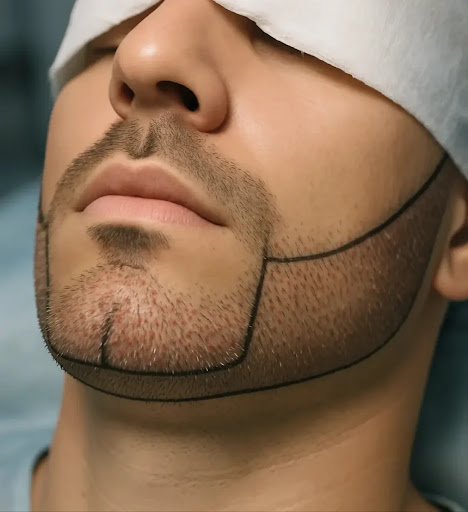
Beard Hair Transplant: Permanent Solution for a Fuller, Natural Beard
What is a Beard Hair Transplant?
A Beard Hair Transplant is an advanced cosmetic hair restoration procedure that helps create a fuller, denser, and naturally growing beard. The treatment involves extracting healthy hair follicles from a donor area—typically the back of the scalp—and transplanting them into areas of the beard that are thin, patchy, uneven, or completely lacking hair growth.
The procedure is ideal for individuals who have patchy beard growth due to genetics, scarring, trauma, burns, or naturally sparse facial hair.
How Does a Beard Hair Transplant Work?
Modern beard restoration is most commonly performed using the FUE (Follicular Unit Extraction) technique. Individual hair follicles are harvested from the donor area and strategically implanted into the beard region while carefully matching the natural direction, angle, and density of facial hair growth.
Who is an Ideal Candidate?
You may be suitable if you:
- Have patchy or uneven beard growth
- Have beard scars with hair loss
- Want a thicker mustache or beard
- Have adequate donor hair availability
- Desire a permanent facial hair solution
Stages of Beard Hair Transplant
1. Consultation & Beard Design
A customized beard pattern is designed according to facial structure and aesthetic goals.
2. Donor Area Assessment
Healthy donor follicles are identified and planned for extraction.
3. FUE Follicle Extraction
Individual follicular units are carefully harvested from the donor area.
4. Graft Preparation
Extracted grafts are examined and preserved under optimal conditions.
5. Recipient Site Creation
Tiny channels are created following the natural beard growth direction.
6. Graft Implantation
Hair follicles are meticulously implanted to achieve natural density and beard contours.
7. Recovery & Follow-Up
Patients receive detailed aftercare instructions and follow-up guidance.
Benefits of Beard Hair Transplant
✔ Permanent facial hair restoration
✔ Natural-looking beard growth
✔ Improved beard density and shape
✔ Scar camouflage in beard areas
✔ Customized beard design
✔ Minimal downtime
✔ Long-lasting results
✔ Increased confidence and facial definition
Recovery Timeline
First Week
Mild redness, swelling, and tiny scabs may be present.
2–4 Weeks
Temporary shedding of transplanted hairs is normal.
3–4 Months
New beard hair growth begins.
6–9 Months
Significant beard density becomes visible.
9–12 Months
Final results continue to mature with improved thickness and coverage.
FAQs
Is Beard Hair Transplant Permanent?
Yes. The transplanted follicles are generally intended to provide long-term beard growth once established.
Will My Beard Look Natural?
Yes. Proper graft placement follows natural beard growth angles and directions to achieve realistic results.
Is the Procedure Painful?
The procedure is performed under local anesthesia, making it comfortable for most patients.
How Long Does the Procedure Take?
The duration depends on the number of grafts required and the area being treated.
Can Beard Transplants Cover Scars?
Yes. Beard transplantation is often used to camouflage scars within the beard region when appropriate donor hair is available.
Can Mustache Areas Be Treated?
Yes. Mustache, goatee, sideburns, and complete beard restoration can all be performed during the procedure.
Why Choose Our Clinic?
- Advanced FUE technology
- Customized beard design planning
- Natural hairline and beard artistry
- Experienced hair restoration team
- Comprehensive aftercare support
- Patient-focused treatment approach
Disclaimer
Beard Hair Transplant is a cosmetic surgical procedure. Individual results vary depending on donor hair quality, facial hair characteristics, healing response, medical history, and adherence to post-procedure instructions. A consultation with a qualified specialist is required to determine suitability and expected outcomes. No medical procedure can guarantee identical results for every patient.